














































































Description
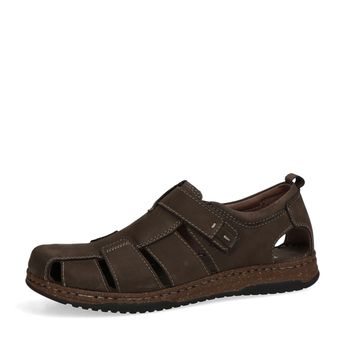
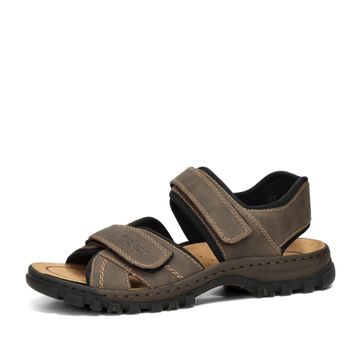
The upper made of high-quality synthetic material is complemented by a synthetic lining and a sole made of synthetic material. The hook-and-loop fastening allows quick adjustment as needed, which you will appreciate during regular wear as well as during a longer day away from home. The brown shade looks classic and is easy to combine with summer leisurewear. Contrast stitching, an embossed Rieker logo, black edging and a more segmented black sole give the sandals a sturdier, functional look without unnecessary decorations.
✓ Hook-and-loop fastening - The hook-and-loop fastening allows simple and quick adjustment, so the sandals are easy to adapt when putting them on.
✓ Comfort width G - The more spacious fit provides the foot with more room and contributes to comfortable wear throughout the day.
✓ Stitched footwear - The stitched production method is a confirmed construction detail that complements the practical workmanship of the sandals for everyday wear.
| Foot length in cm | Size EU |
| from 24,4 cm | 39 |
| from 25,1 cm | 40 |
| from 25,7 cm | 41 |
| from 26,4 cm | 42 |
| from 27,1 cm | 43 |
| from 27,7 cm | 44 |
| from 28,4 cm | 45 |
| from 29,1 cm | 46 |
| from 29,7 cm | 47 |
| from 30,4 cm | 48 |
| from 31,1 cm | 49 |
More products of the brand
See moreYou might also like





Sandals have beautified feet since the beginning of civilization
The origin of sandals dates back to pre-historical time and they have beautified feet since the beginning of civilization. This type of footwear, however primitive, was worn by civilizations thousands of years ago which has been proven by findings from ancient burial places. Even in the Ancient Egypt, the home of one of the oldest civilizations on earth, mummies have been found buried with several pairs of sandals and flip-flops. This is not a coincidence. The ancient Egyptians believed that life did not end with one´s death. It started, on the contrary. For such reason the ancient Egyptians had in their tombs anything they might have needed in their new life. And without sandals, as far as noble Egyptians were concerned, it would not work. The Egyptians had their sandals made of palm leaves and papyrus. They are sometimes observable on the feet of Egyptian statues and in reliefs. The role of so called sandal-bearers may also be found there. According to Herodotus sandals of papyrus were a part of the required and characteristic dress of the Egyptian priests.
In Ancient Greece sandals were the most common type of footwear for women. While women spent most of their time at home sandals became a very comfortable home footwear. The Greek sandals featured a multitude of straps with which they securely fastened to the foot. The top of the sandals was usually of coloured leather. The soles were made of cattle skin, of even better quality and made up of several layers. In Ancient Rome residents used to carve their boots and sandals with elaborate designs.
The Greeks were the ones who took the possession of sandals most. The word sandal is of Greek origin - σάνδαλον : sándalon.
The Ancient Levant sandals ("Biblical sandals") were made from non-processed leather and dry grass and had strings or ropes made of simple, cheap materials. Though, sometimes golden or silver beads and even gems were added.
There is a pair of historical sandals in Europe made of papyrus leaves dating back 1500 years ago. Though, it was more or less an early version of flip-flops from various materials.
Comfort and lightness above all
Sandals have gone through many design and material changes since their first use, however, they still have their attribute one expects from this type of footwear – they are designed to be comfortable and not to cause harm to its wearer. Otherwise they have not been chosen correctly. While sandals largely reveal your feet it is very important that those parts of the footwear which are fastened to the foot are firm as not to endanger your steps. Sandals must be tried correctly and must firmly hold the toes, feet and ankles. The feet must not move inside the sandals so as not to slip out. It is only up to you how much „freedom“ your feet deserve as far as the design of sandals is concerned. According to the experts sandals in which your foot moves too much are not the right ones. However, it is worth trying a model of half size more than you normally wear. The foot must fit to the sole (it should not stick out or have too much space) when you stand upright.
Sandals as the centre of universe
Women have a thing for sandals, as their top footwear each year, however, we should not forget about the men. There are moments when men want to feel comfortable, stylish and modern. Women choose according to colours, heels, platform, sole, round toe, closed toe, etc. Men are more pragmatic. Stylish colour, sustainable material, quick fastening (hook-and-loop) and timelessness. Sandals are casual shoes where one may spoil only one thing. Wearing them with socks. Let´s avoid such modern faux pas even during holiday season!


