











































































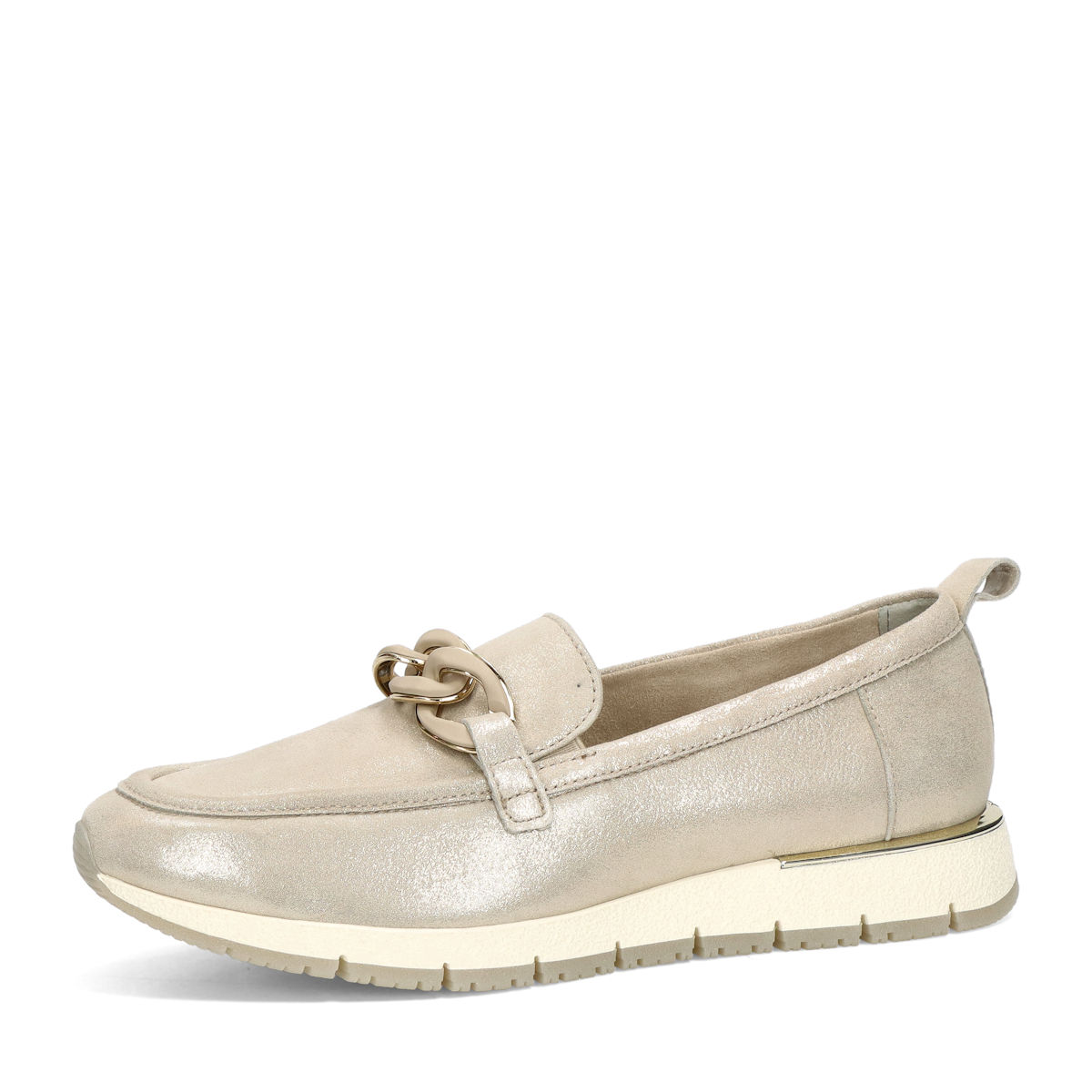
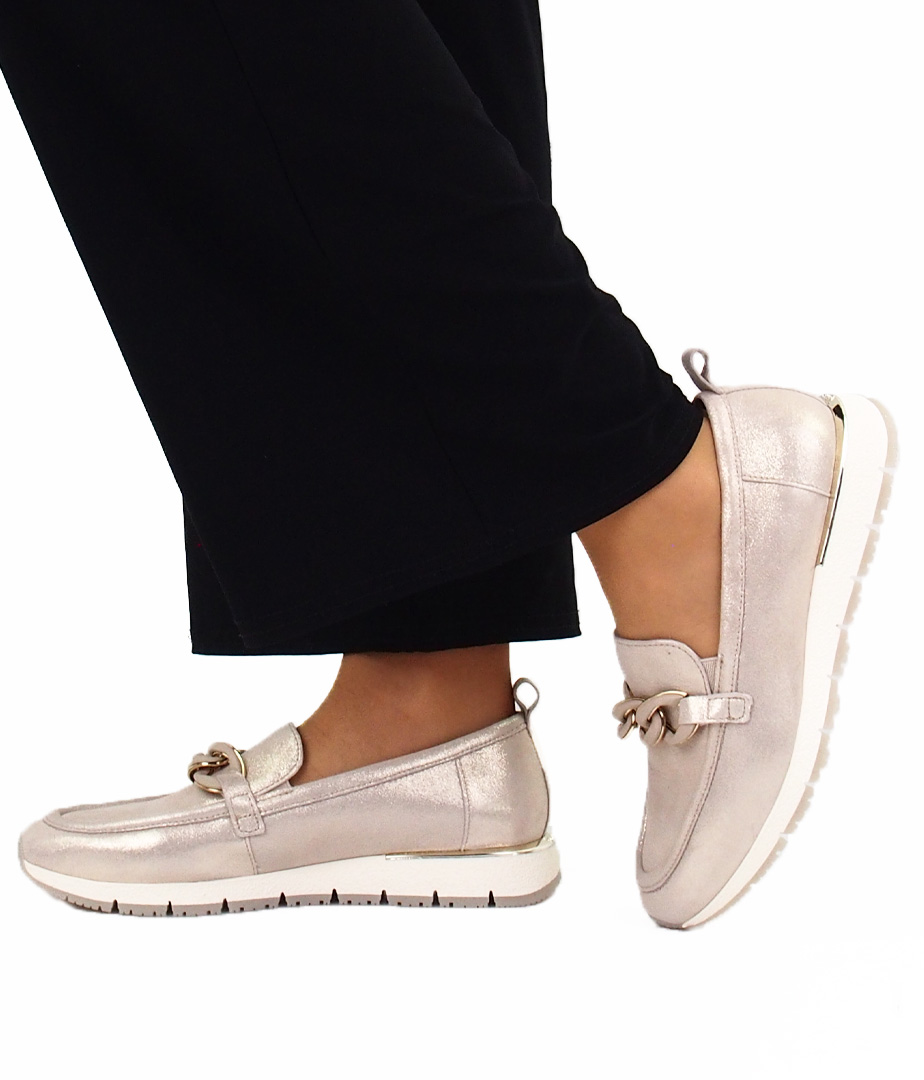
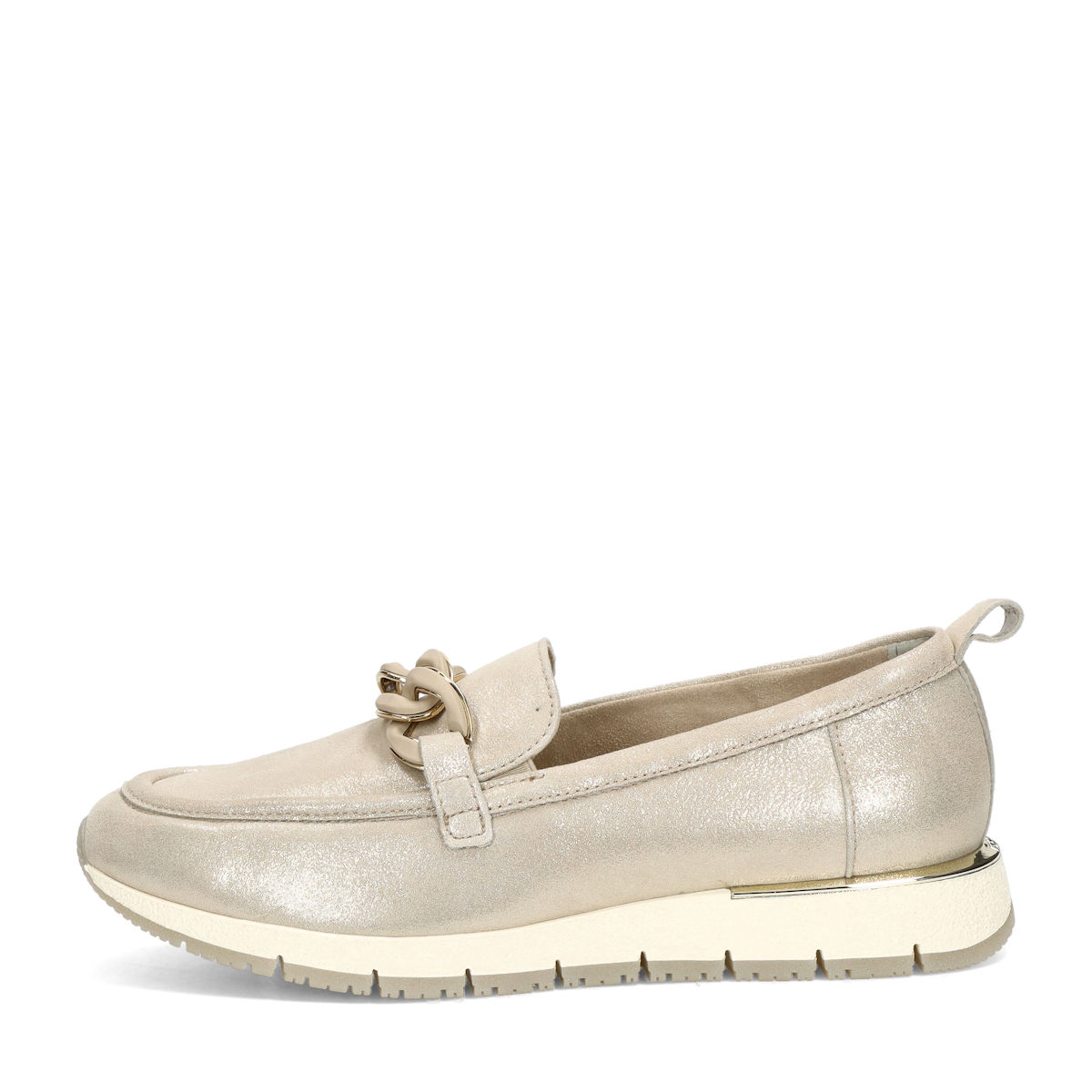
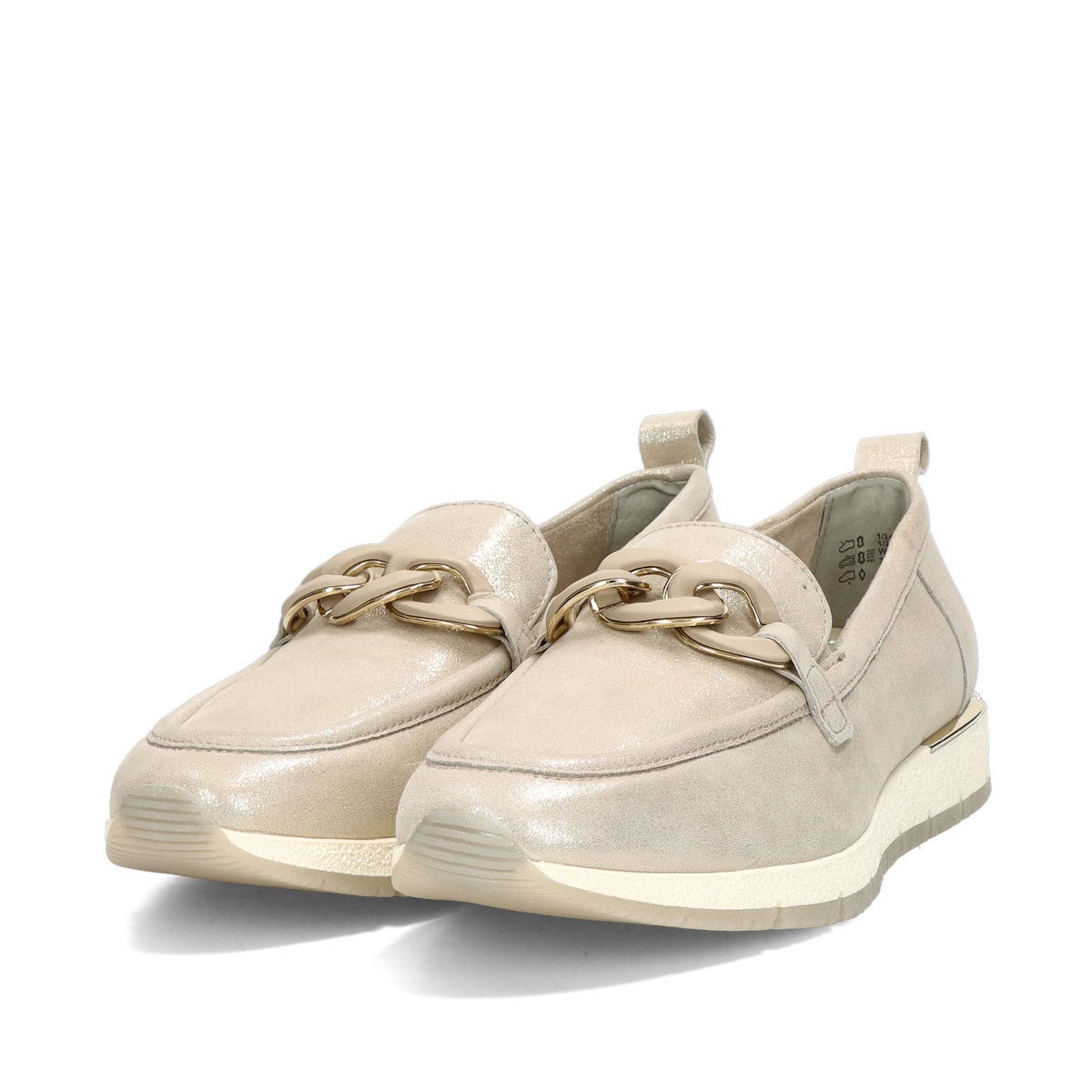
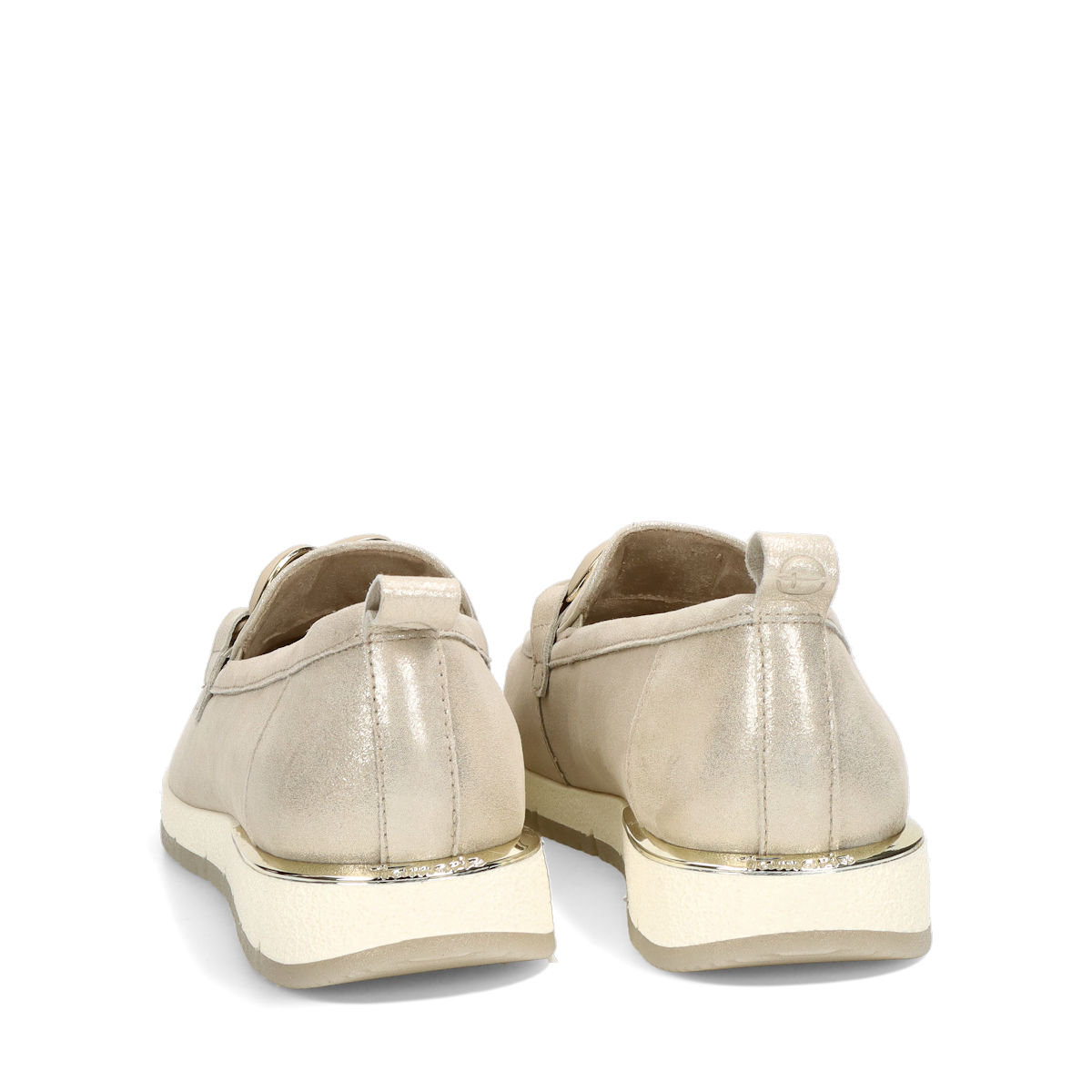

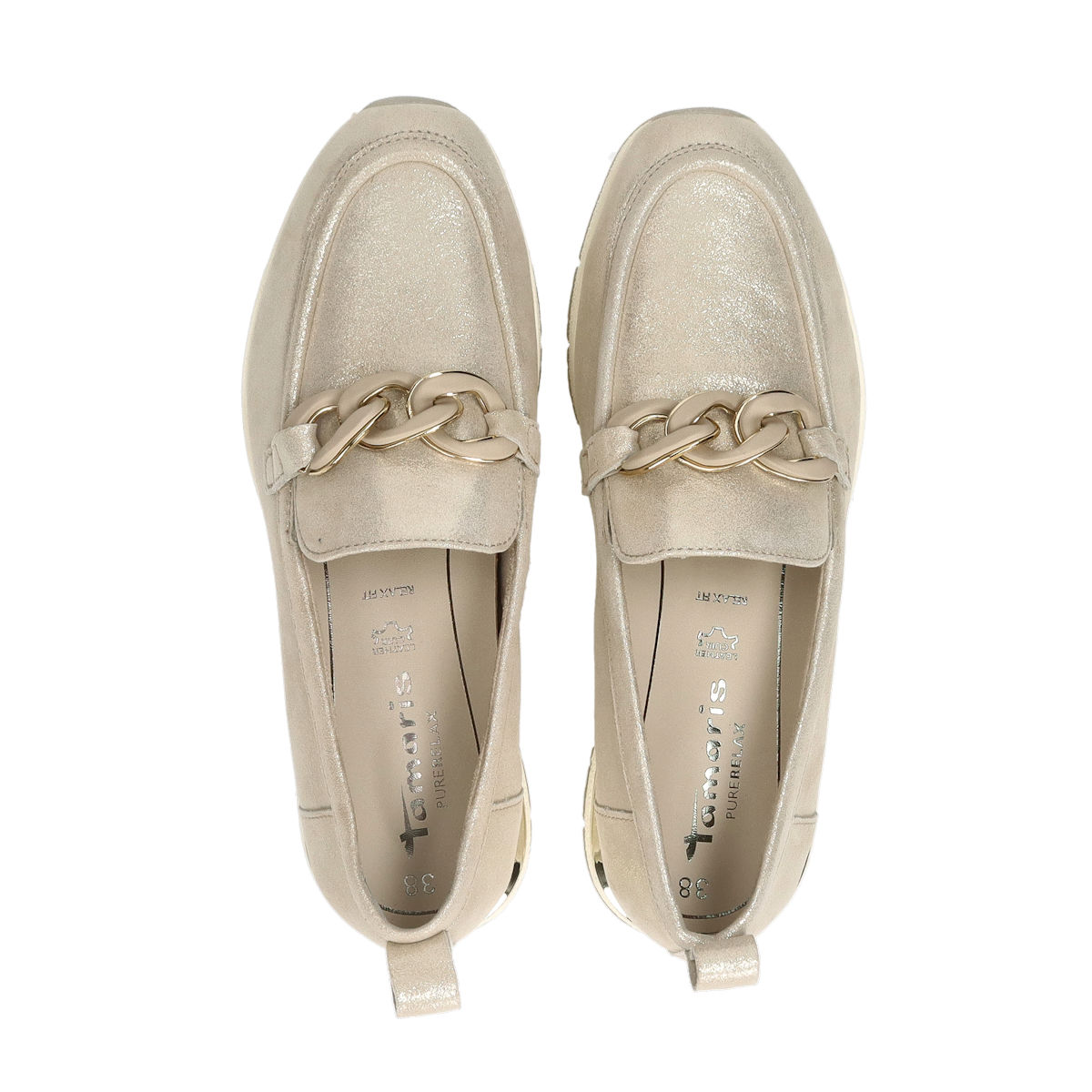
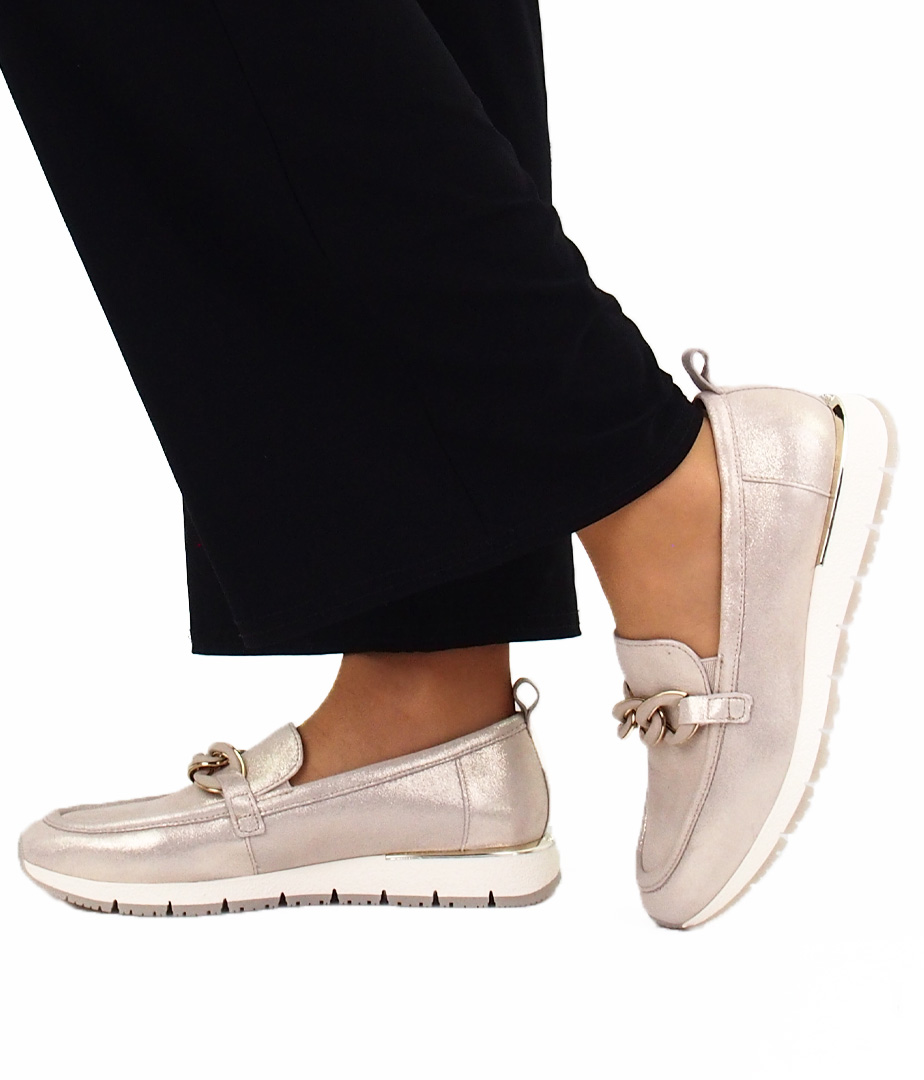


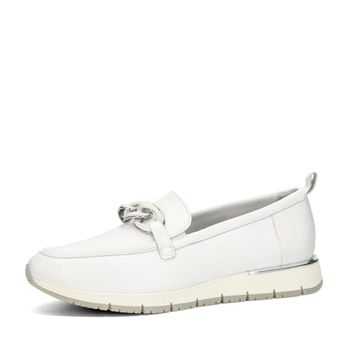
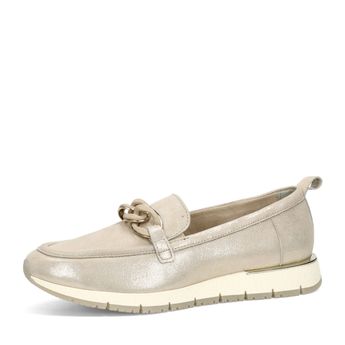
Tamaris women's stylish moccasins - beige/gold

Description
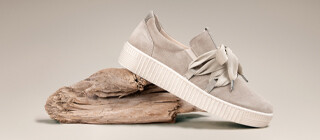
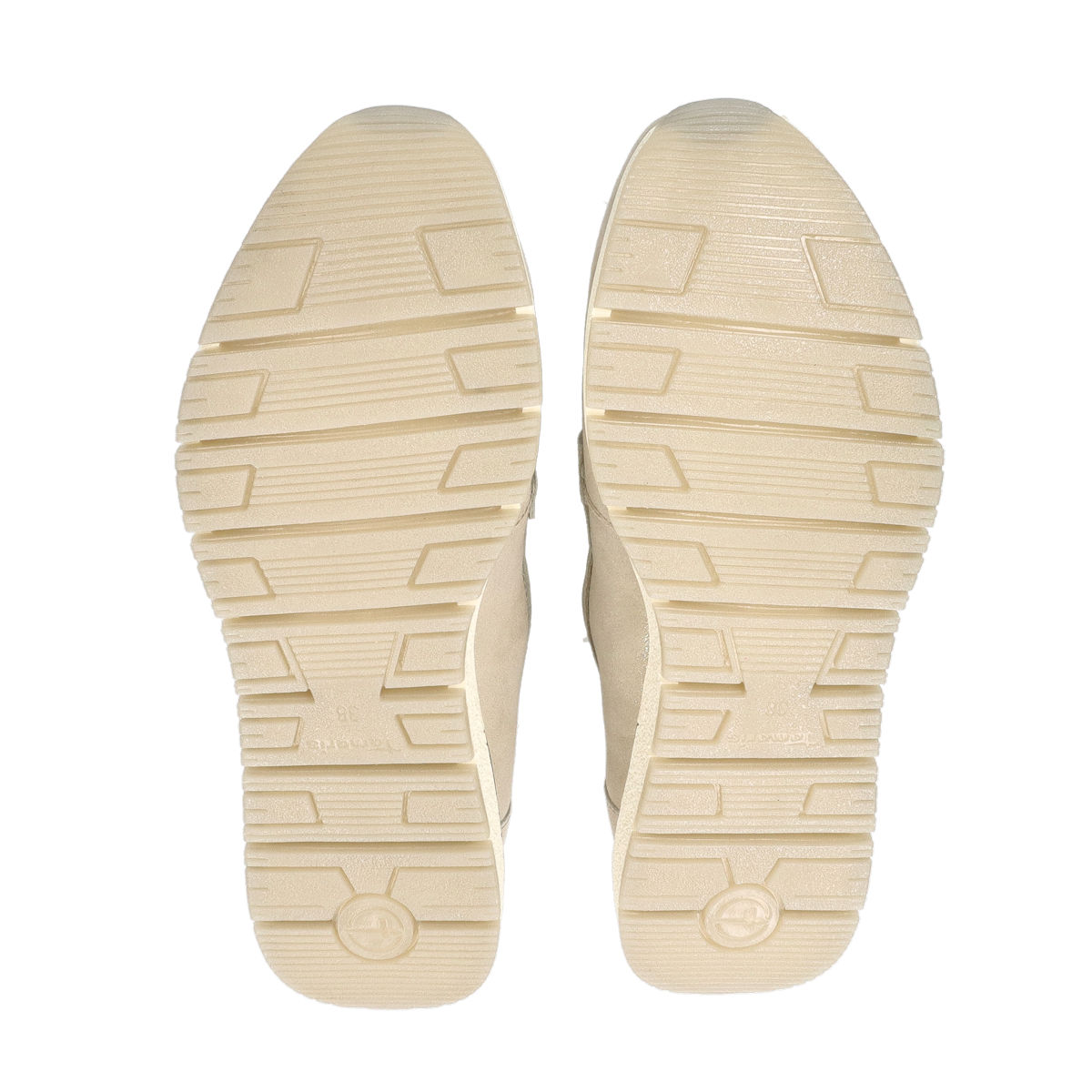
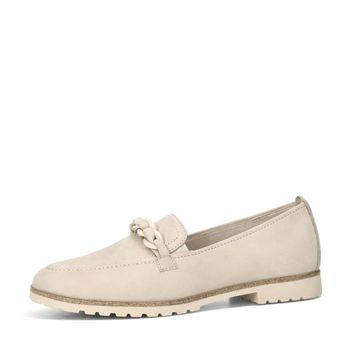
The flat sole is suitable for everyday wear and preserves the natural character of walking. At the front it is approximately 1.5 cm high, and in the heel area 2.5 cm, so the footwear looks low and relaxed. The light-coloured sole with a segmented bottom matches the subtle shade of the upper and supports the casual-elegant style of the loafers. The beige colour is easy to combine with trousers, jeans and simple dresses, so these leather low shoes are a practical addition to the wardrobe for the warmer season.
✓ Slip-on design - The loafers are put on without lacing or a buckle, so they are practical for days when you need to put on footwear quickly and easily.
✓ Flat sole - The low profile of the sole supports a natural and stable step, which is suitable for regular everyday wear.
| Suggested foot length in cm | Size EU |
| from 21,7 cm | 35 |
| from 22,4 cm | 36 |
| from 23,1 cm | 37 |
| from 23,7 cm | 38 |
| from 24,4 cm | 39 |
| from 25,1 cm | 40 |
| from 25,7 cm | 41 |
| from 26,4 cm | 42 |
More products of the brand
See more





Great invention of Indians
Historically moccasins represent the footwear worn by Indians long before the first white settlers arrived there. In principle it is a footwear made of soft leather which was left over from hunts of skilled Indians. The leather was non-flexible to be used for clothing, therefore it was used for sewing shoes. The sewing technique was almost similar with all tribes, however, the products gradually distinguished in their patterns. According to this personal creativity and esthetical side one could differentiate the origin of the moccasins style.
The moccasins played an important role in the live of Indians. They were a symbol of protection and acceptance. Only new moccasins were worn to battle, as they symbolized a safe return. At burial, a good pair of moccasins, often beaded on the bottom, symbolized the family's love for the deceased.
Apart from embroidery moccasins of various tribes differed in the material used for sewing. Moccasins protected the foot while allowing the wearer to feel the ground. The Plains Indians wore hard-sole moccasins with soft upper, given that their territorial geography featured rock and cacti. The eastern Indian tribes wore soft-sole moccasins, for walking in leaf-covered forest ground.
Various trends and variations of moccasins
In 1936, G.H. Bass’s Weejun shoe took America by storm. With its puckered toe and slip-on comfort, the shoe resembled the most classic of the indigenous American footwear pieces. Despite the fact that the company (also with the name Weejun, Norwegian) referred to a forgotten Scandinavian footwear history, further inspection of “Tese Shoe” shows that the influence of an Indian original is undoubted.
The original American footwear, the moccasin and its many variations across the continent, was for centuries the golden standard in footwear. However the Americans declare sentimentally, that they were misunderstood and misnamed by arriving white settlers. The truth is that moccasins were given many new trends and added values which make them everything but not an old-fashioned footwear. Thanks to their design they adapted to the taste of men and women and nowadays one may easily find a good-quality footwear designed for men as well as for women.
Moccasins are considered informal footwear, however, if you match them with semi-formal clothing they may even accompany you during your working day. They look best at informal social events where one can appreciate their design in various colour shades.
Moccasins are extremely comfortable and stylish shoes and there is no need to worry that they would get out of fashion. They are designed for inside and outside wearing and may be used during various seasons. The rain, however, is not their friend and therefore good care is required. Get inspired and choose your pair at Robelshoes.eu.


